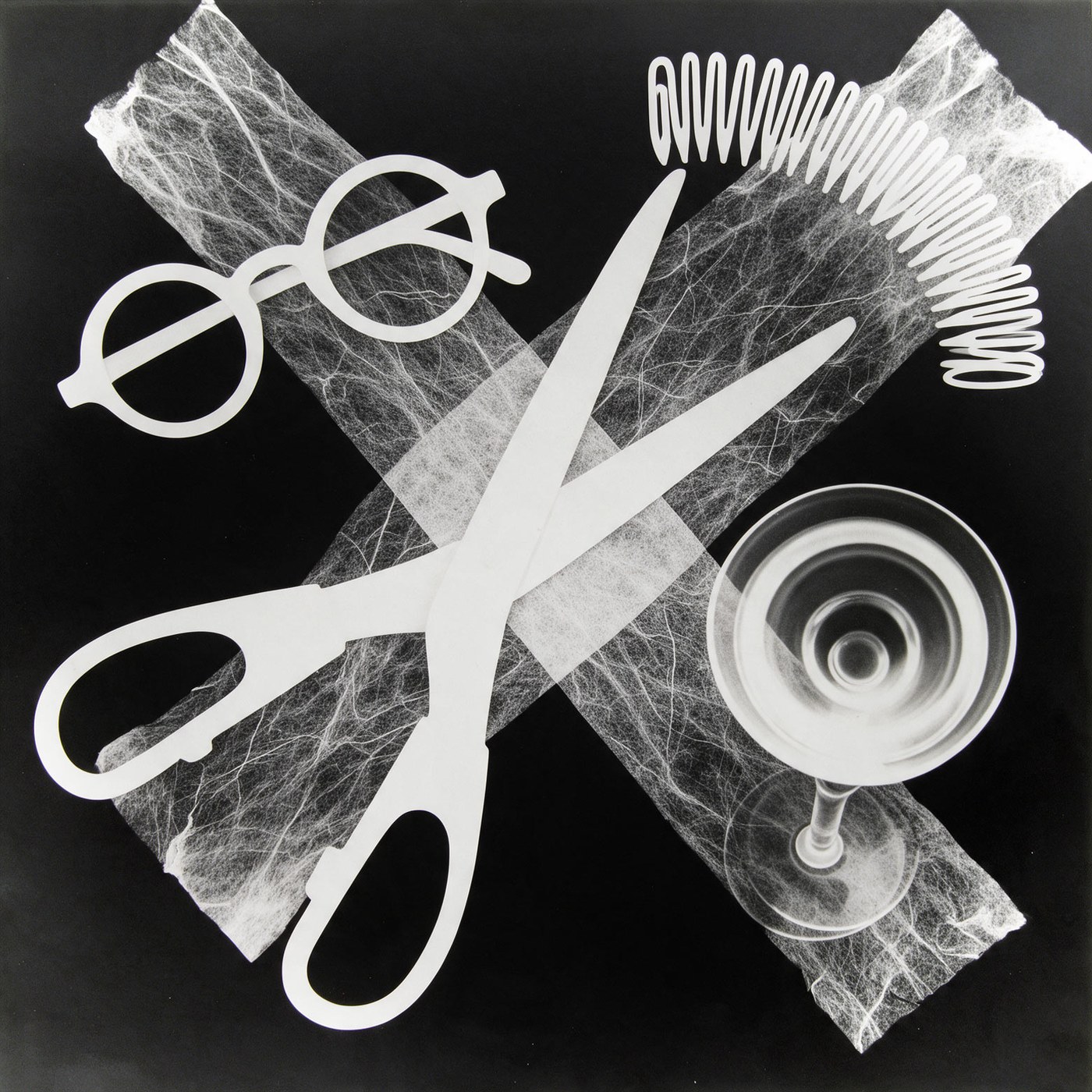
Without a Camera
In the 1920s Man Ray experiments in the darkroom. Under a red safelight, he lays objects on photosensitive paper, then exposes it all by switching on the light. The imprint is sharp where the object touches the paper and soft where it lifts away. It is a photographic print made without a camera. These are the rayographs.
A few years later Lee Miller, his collaborator, switches on the light by mistake while developing a print. The print is exposed to light a second time and the image changes. They keep that flaw and make it a distinctive mark of their own: solarisation.
A mistake on its own is worth nothing. It is worth something when someone recognises it as a real alternative, or as the evolution of an idea, and decides to keep it.
Today images can also be made without a camera, with artificial intelligence. Each request, the prompt, often leads to many attempts, and among them there is always something that goes off course. But sometimes that very mistake goes in the right direction, and then you keep it.
Give Man Ray a generative model and he would have a lot of fun with its mistakes, and he might even sign them.